From a Sprunki OC Portrait to a Playable Character Plan
An appealing portrait is one piece of a playable musical character. Turn it into a practical brief by specifying the sound, animation, icon, and a small mixing test. The original example below is a planning exercise you can adapt to your own fan character.
Begin with a musical job
Choose one role before building a long character biography. A beat establishes rhythmic attacks, an effect adds a distinct texture, a melody supplies pitched material, and a voice contributes a vocal phrase. Listen to the main lineup for reference: Oren is useful for a kick, Sky for music-box detail, Durple for a horn, and Pinki for a choir-like color.
For this exercise, imagine an original performer called Copper Lantern. The visual idea is a copper-colored head with one hanging lantern shape. Its musical job is a short wooden percussion pattern. The name and concept are an example created for this worksheet; the goal is a brief you could give to an artist or audio collaborator.
Write the loop brief in plain language
Describe the sound without relying only on a genre label. Copper Lantern’s brief could say: a dry wooden tap, a short repeating pattern, a clear strongest accent, and enough quiet space for a vocal. This gives a collaborator a texture and arrangement goal. You can sketch the rhythm as marks on paper before making any audio.
When you have a recorded or synthesized loop, listen across its join. An abrupt cutoff or unintended gap is easier to notice while the sound repeats alone. Then compare it with a simple drum or voice reference. Match the timing to the project you are actually building; the loops from different fan-made players are not automatically interchangeable.
Plan an idle pose and an accent pose
An idle pose should make the performer recognizable at the size used on a stage. The accent pose can move the hanging lantern in the same direction as the strongest tap. Start with that small change instead of a complex animation whose motion has no relationship to the sound.
Keep the main silhouette visible in both poses. Compare the drawing on a light background, a dark background, and next to another performer. Thin details may disappear when the character is reduced, so reserve the strongest outline for the feature that identifies the character. A readable small design is more useful to a player than many details that only appear in a full-size illustration.
Give the selectable icon its own design pass
A stage portrait and a sound icon have different jobs. The portrait shows the performer; the icon helps the player find and assign a part. For Copper Lantern, use the lantern shape as the icon instead of shrinking the entire body. Compare it with existing headphones, bows, hats, and flower icons to make sure it remains distinct.
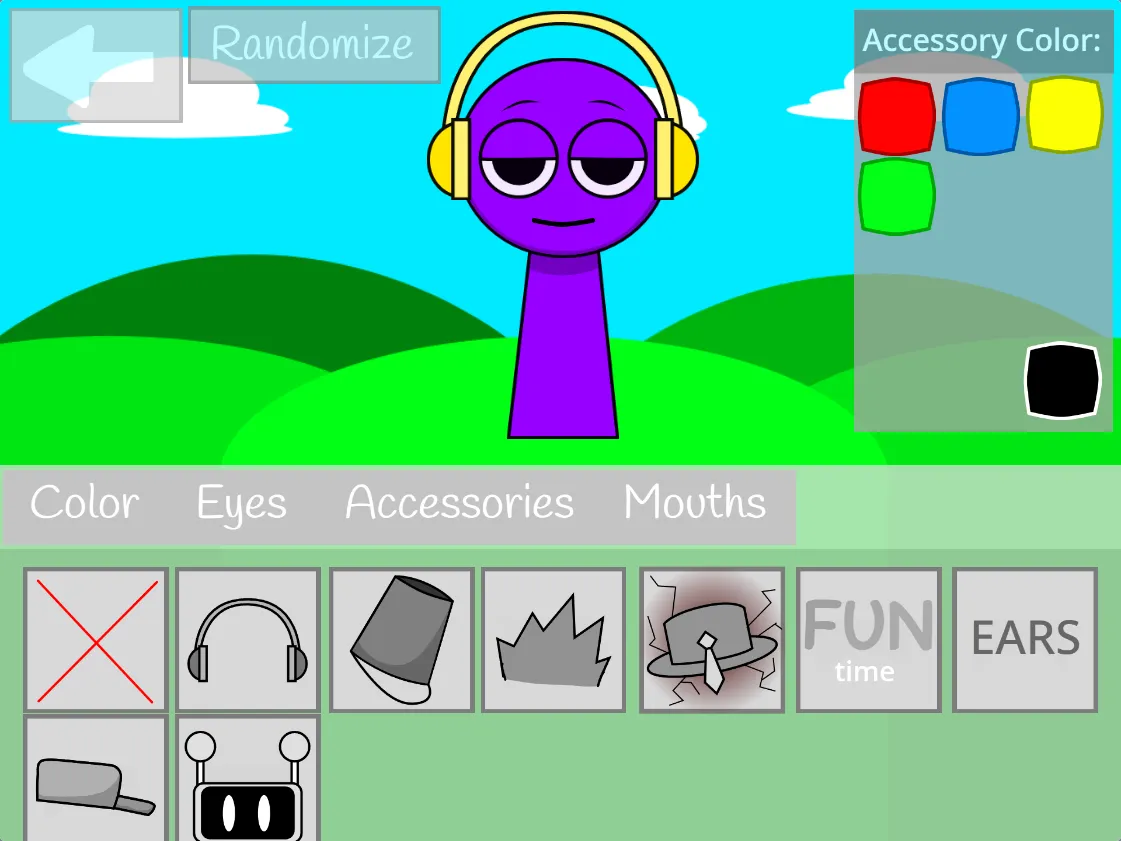
The OC Maker is useful for exploring a palette and accessory combination. Its captured purple character with yellow headphones demonstrates how strongly an accessory changes the outline. Record the combination you like, then make separate notes for the sound and animation. Those assets still need a plan even when the portrait is already appealing.
Run a small arrangement test
When the character is playable in your own project, test the new part alone, with one beat, and with one vocal. Write down what becomes harder to hear after it is added. A wooden pattern may work better with a simple kick than with several competing drum figures. Change the pattern or its texture before solving every conflict by adding another part.
Use a repeatable test sheet: character version, sound version, icon, two comparison partners, and one change to make next. This keeps art revisions separate from audio revisions. If a new animation looks better but distracts from a sound accent, you can revise that motion without losing the audio decision you already made.
Prepare a clear handoff
Keep the portrait, two pose sketches, icon, loop brief, and actual audio file together when collaborating. Include the intended timing and the project where the part was tested. Record who made each asset and the permissions for any borrowed material before sharing the package.
A short, specific brief is easier to implement than a list of imagined special powers. Once the basic performer works, you can develop an alternate design or a story around it. Start from a character whose normal icon, motion, and sound form one understandable idea, then make each later variation a deliberate creative choice.