Sky, Durple, or Tunner? Choosing a Lead Sound
Sky’s music box, Durple’s horn, and Tunner’s whistle give a mix three distinct lead colors. Compare them with a small, repeatable arrangement so you can choose the instrument you want to feature, rather than pick a character only by its portrait.
Set up one fair comparison
Use the main Sprunki player for all three tests. Reset between arrangements, keep the device volume unchanged, and begin with one lead and one supporting rhythm. A screenshot from one mod and a sound from another would answer a different question, because remixes can replace the audio while keeping a familiar accessory.
Oren’s kick is a useful common foundation. It provides a low drum reference without adding another melody. First hear the lead alone, then add the kick, remove it, and bring it back. Keep other voices and pitched sounds out until you can follow the phrase you are comparing.
Sky: a small music-box phrase
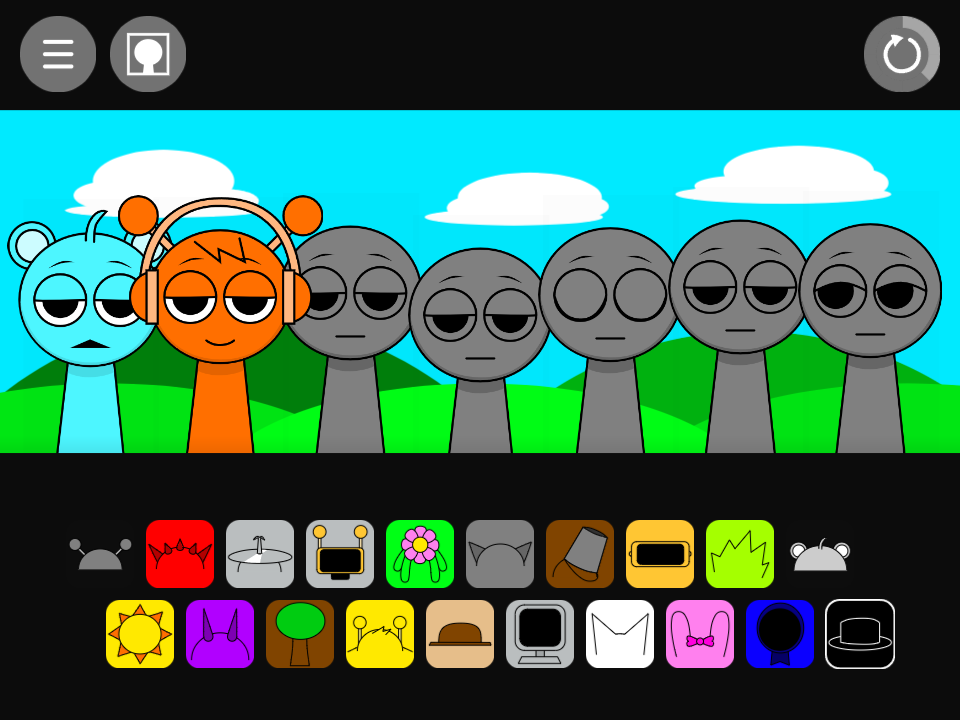
Find the light-blue bear icon at the right end of the upper row. In the inspected main build, its normal samples are labeled music box1 and music box2. Although Sky is grouped with effects in the lineup, this part supplies pitched material that can become the focus of a small arrangement.
Place Sky first and Oren second. Listen to the music-box phrase above the kick and notice whether you still follow it when another bright texture is added later. Clukr’s cymbal is a useful test: compare with and without it, keeping the kick constant. If the small melody becomes less clear, the arrangement may need fewer upper details.
Durple: a horn as the main feature
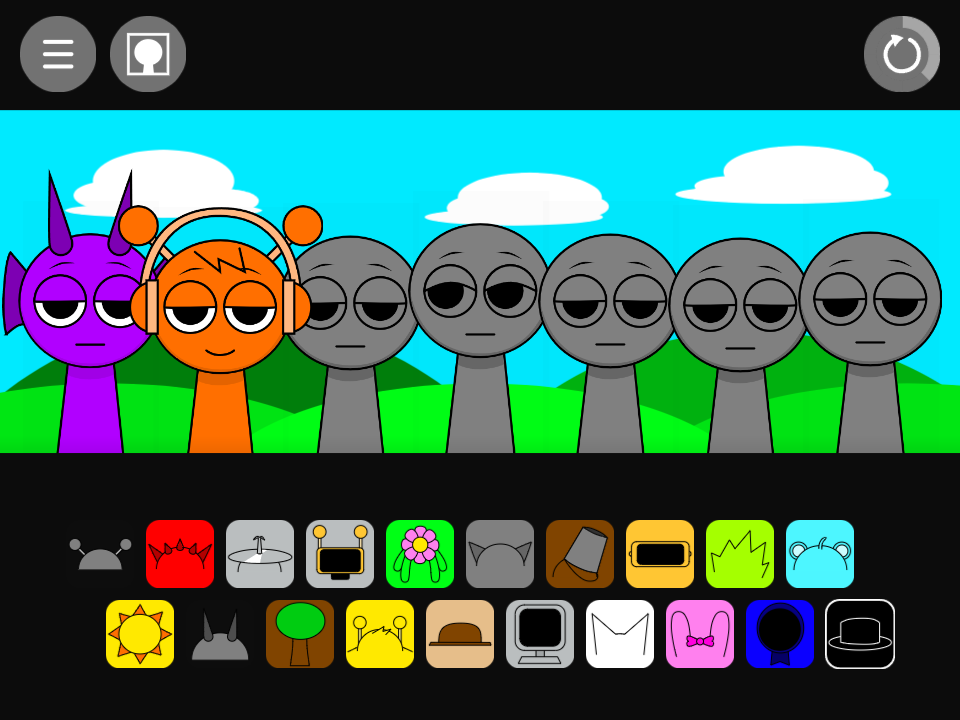
The purple horn icon is second in the lower row. The loaded normal pair is tromp new1 and tromp new2. Start with Durple alone, then add the same Oren foundation used for Sky. Follow the full phrase and its changes instead of judging the instrument only from its first attack.
Once the horn is recognizable, try Mr Tree’s organ as a third part. Hear the pair with the organ, remove the organ, and compare. A held pitched texture can support the horn or occupy space that you wanted to leave clear. Keep that addition only when the relationship between the parts remains easy to hear.
Tunner: a whistle with light support
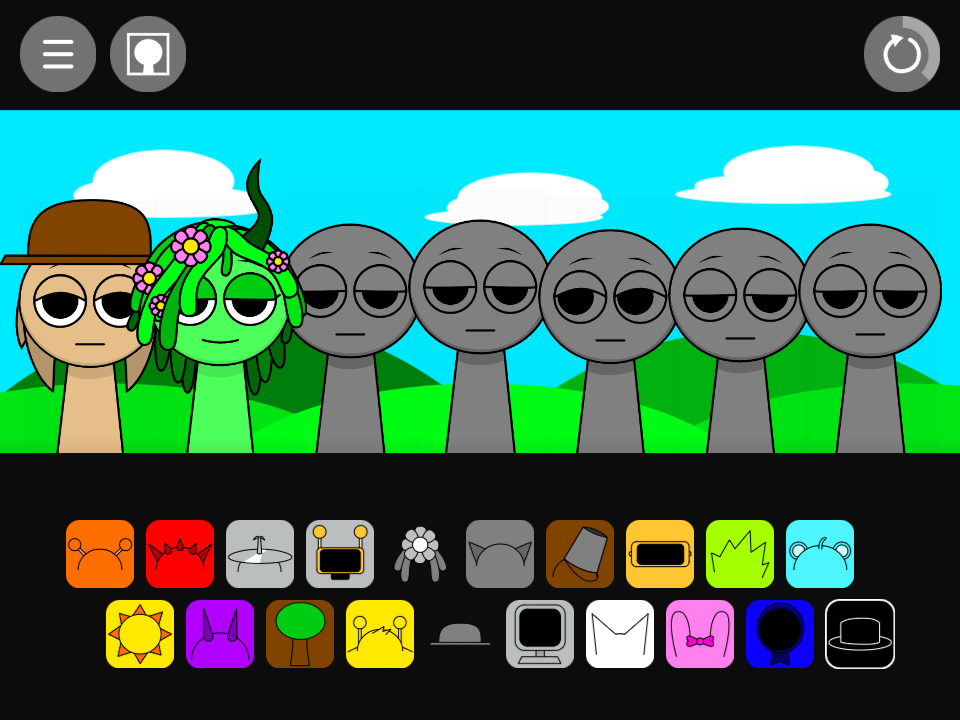
Choose the broad brown hat in the lower row. Tunner’s normal pair is whistle1 and whistle2. Repeat the same kick comparison first, then try a lighter supporting part: Vineria’s flower icon. That swaps a low drum reference for a shaker-like texture while leaving the whistle as the clear lead.
The captured Tunner–Vineria pair is a second exercise, rather than a claim that the shaker is required. Compare it with the kick version and decide whether you want a clear low attack or lighter rhythmic movement. Keep the whistle unchanged so the support is the only difference you are judging.
Choose a lead before combining leads
Sky, Durple, and Tunner can each supply a recognizable focus. Combining all three immediately makes it harder to tell which phrase you like. Pick one, choose its supporting rhythm, and compare one possible third part. If you want two leads, remove one for a repeat and check whether the remaining phrase becomes much clearer.
Keep a short listening note for each test: the selected icon, the support, and the part you wanted to hear most clearly. You can return to those notes when exploring a remix. If the same icon produces a changed timbre there, you have a reference arrangement for comparing the new build rather than an assumed universal character sound.